An erection is supposed to be the honest readout of how much you wanted her. When it doesn’t show up, or shows up for no reason at all, the obvious conclusion is that the wanting was fake, or that something in you is broken.
Physical arousal and desire are two separate signals, measured separately in research, and even in men, whose signals track each other more closely than women’s do, they only agree part of the time. The gap has a name: arousal non concordance. A stalled night doesn’t grade how much you wanted her.
First Second Date, and My Body Never Got the Memo
In August 2019 I went on the first second date of my life. The pursuit that got me there had worked exactly the way it was supposed to: I’d approached her, gotten her number, and set the date up without the usual stalling. Then we sat down across from each other, and I felt nothing.
I wrote it up that same night, the way I wrote up most things then, weighing what was fair in her criticism of me against what wasn’t.
So what was good about this experience: I did what I set out to do: I pursued this opportunity to its natural conclusion. I have complete closure now. First time in my life I have been on a second date. […] Even though this girl would not want to see me again in a romantic context, I also don’t want to see her either. I never felt desire for her while we were talking. But I think part of the reason was the piles because I couldn’t get a boner. I think with more experience will come faster filtering.
Read that line again.
I never felt desire for her while we were talking. But I think part of the reason was the piles because I couldn’t get a boner. Writing it down for myself, with nothing to perform and nobody to perform it for, I still couldn’t cleanly separate the two: I didn’t know whether I didn’t want her, or whether my body simply wasn’t answering that night. Most non-concordant nights won’t hand you a clean single cause either. Not knowing which one it was doesn’t change what to do about it.
Arousal Non Concordance Is Two Separate Signals
The term for that gap is arousal non concordance: the measured distance between how turned on a man says he is and what his body is doing about it, treated as its own quantity.
A meta-analysis of more than 130 studies found that men’s self-reported arousal and their genital response correlate at about r=.66. Women came in lower, at r=.26, which is the number this term usually travels with online. But .66 is still short of 1. More than half the variation in a man’s physical response goes unexplained by how turned on he says he feels, and that figure is the average across a large body of research rather than one bad night’s exception.
The book’s own model of the mind-body connection says why the gap exists before anything disrupts it. Physical arousal moves like a dial with a ceiling, climbing in a fairly steady, capped way as stimulation continues, while mental arousal has no ceiling at all: it can spike on a single thought, or drop out entirely on a single thought, with nothing physical changing to cause either. Most of the time the two pull each other along and move together. They are two signals that happen to correlate well, most nights.
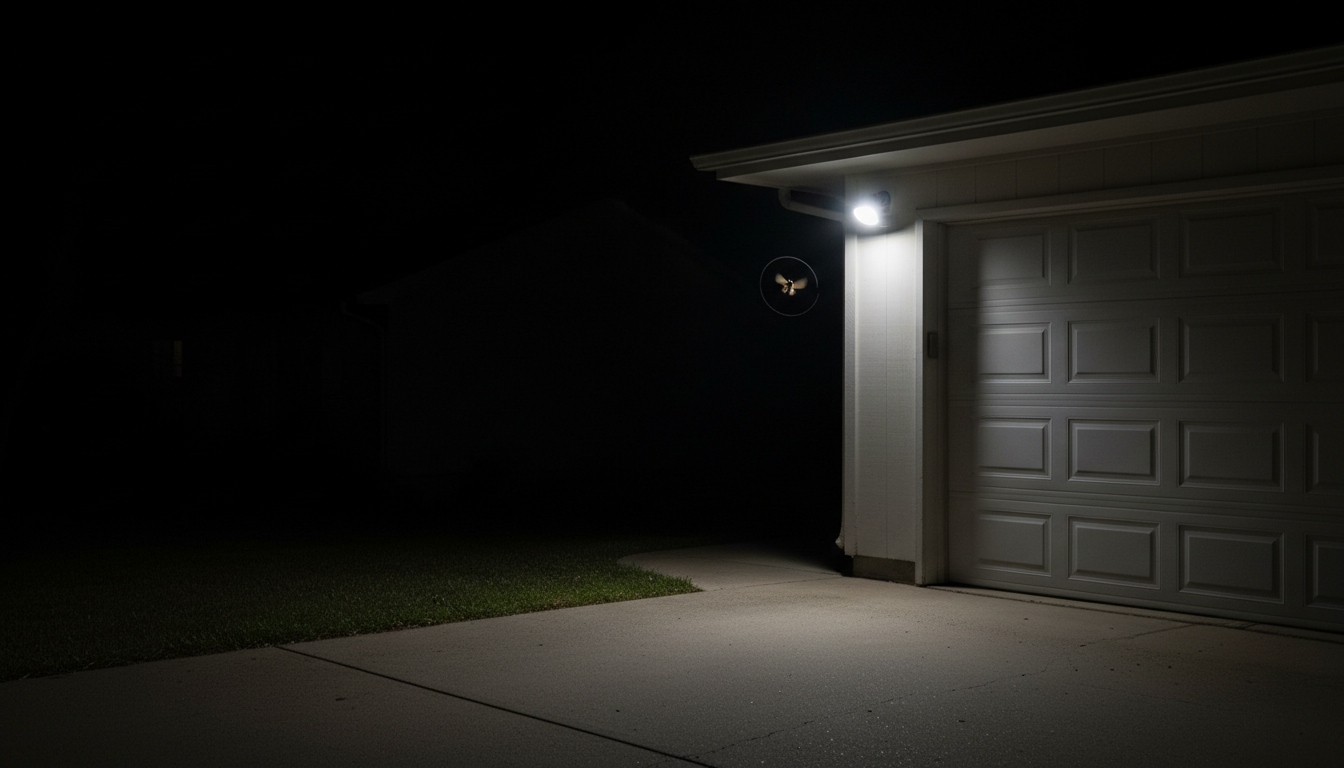
A motion-sensor floodlight over a garage is wired to fire on motion in general. It’ll trip for a moth near the lens, a gust rattling a bin lid, a stray cat. The sensor registers movement and leaves the question of what caused it alone. On a still, cold night it can also miss someone standing motionless six feet away, because a body holding still gives it less to work with than a scurrying animal does.
The light coming on doesn’t prove someone’s there, and the light staying dark doesn’t prove no one is.
Physical arousal runs on the same principle. It fires on general arousal-relevant input, novelty, contact, adrenaline, whether or not desire is the cause. An erection is not a lie detector for desire. It can stay dark in front of the one thing you want most, when something louder is competing for the same wiring.
Why the Gap Opens Wider on the Night You Wanted
A first date supplies everything that competes for that wiring at once. Novelty pulls attention. Self-monitoring pulls more of it, tracking how you sound, how this is going, whether she’s into it. The vulnerability of wanting someone new hasn’t had time to become familiar yet. None of that is desire, and all of it uses the channel desire needs in order to reach your body.
The book names the pattern behind this directly: genital stimulation can fail to produce or sustain arousal despite adequate physical input, which is a documented pattern in men’s sexual function research and the same source the book cites for this exact point. One specific version of it gets its own article: attention switching from sensation to self-monitoring right at the moment of entry. On that second date the same competition for attention played out over a conversation.
The exact mix pulling at me that night, novelty against nerves against wanting the date to go well, is something the research hasn’t teased apart the way it has the overall mismatch. What I just described is my own pattern-matching across my own nights, and no study handed it to me.
The concordance research also measured something narrower than a date. Most of it uses a standardized erotic film or audio clip in a lab, with none of the weight of an evening with someone you’re pursuing, and whether that .66 correlation survives a live, vulnerable moment hasn’t been tested directly. Concordance tends to run higher when the material cleanly matches what a man says he wants, and a socially loaded first try with someone new rarely does.
If this is what happens most times, with most people, regardless of the night, that’s a conversation with a doctor. What’s described here is the ordinary, occasional gap, and it doesn’t stand in for a diagnosis.
Track the Tell, Not the Erection
None of this needs the gap to close before it works. It needs you to stop treating the erection as the readout and start reading something earlier.
- Stop checking. The moment you catch yourself glancing down to grade your own erection, that glance is competing for the same attention any mental ramp needs. Notice the check once, let it go, and don’t run a second lap on it.
- Find the specific thing generating desire for you right now. A detail, a thought, a sensation. The general idea that you should be turned on gives you nothing to work with, and non-concordance shows up hardest when the desire is real but vague.
- Watch for the tell before the main event. A caught breath, a twitch, a shift in muscle tension. The book ties that physical ramp response to mental arousal, and it tells you more than the erection does.
- Let touch follow the tell. Once you catch one, layer in contact. Leading with contact and hoping arousal catches up runs the same mismatch backwards.
- Expect more than one wave. Treat it as a cycle you might run two or three times across a session, one you can miss and pick up again a few minutes later. Mental arousal is erratic enough to vanish on the first try and still be there for the second.
- Know the stopping point for that night. Several honest attempts producing nothing is information about tonight, and it grades neither you nor her. A pattern that repeats across many nights belongs to the doctor’s conversation above.
The book’s version of this exercise was built and tested for solo practice, working the mental ramp alone with nobody to read and nobody reading you. Running the same tell-tracking inside a live, partnered, vulnerable moment, where you can’t pause and refocus mid-conversation, is something I’ve carried over myself, and the exercise was never designed or tested for it. The fuller technique behind steps one and three, shifting attention off self-monitoring and onto sensation, is Sensate Focus, and practicing it solo before you ever need it live costs you nothing.
You Stop Grading the Whole Night by One Signal
Catch a tell once, and something small changes while it’s still happening. A stalled response stops reading as a verdict on you or on her in real time.
You’ll still have nights where nothing shows up.
What changes is what you do with the information. Reconstructing an explanation the next morning, working backward from a body that went quiet to a story about what that meant, gives way to reading the signal that was available all along, one level below the one you’d been grading yourself on. Tracking it takes no more confidence and no harder effort to want her.
The gap between wanting and responding doesn’t close for good. It opens less often once you know where to look, and when it does open, you can tell “not yet” from “not her” while you’re still in the room.
The free emails take that split apart: what raises the wanting, what your body does with it, and why the two run on separate clocks.
Reading one signal on one night is where this starts. Holding wanting and responding together across a whole encounter, so what you caught at minute three is still there at minute thirty, takes a working method, and that is what the book I wrote lays out: how to build the state, how to hold it through a session, and what happens when you carry it into a room with a woman who stops you cold.